

Overnight monitoring
7pm–7am
Call
(945) 384-5134Why mobile, not a fixed install
The working face moves. Cells migrate. Stockpiles get rebuilt. A camera bolted to last year's berm is aimed at yesterday's risk. A trailer goes where the heat is this week.
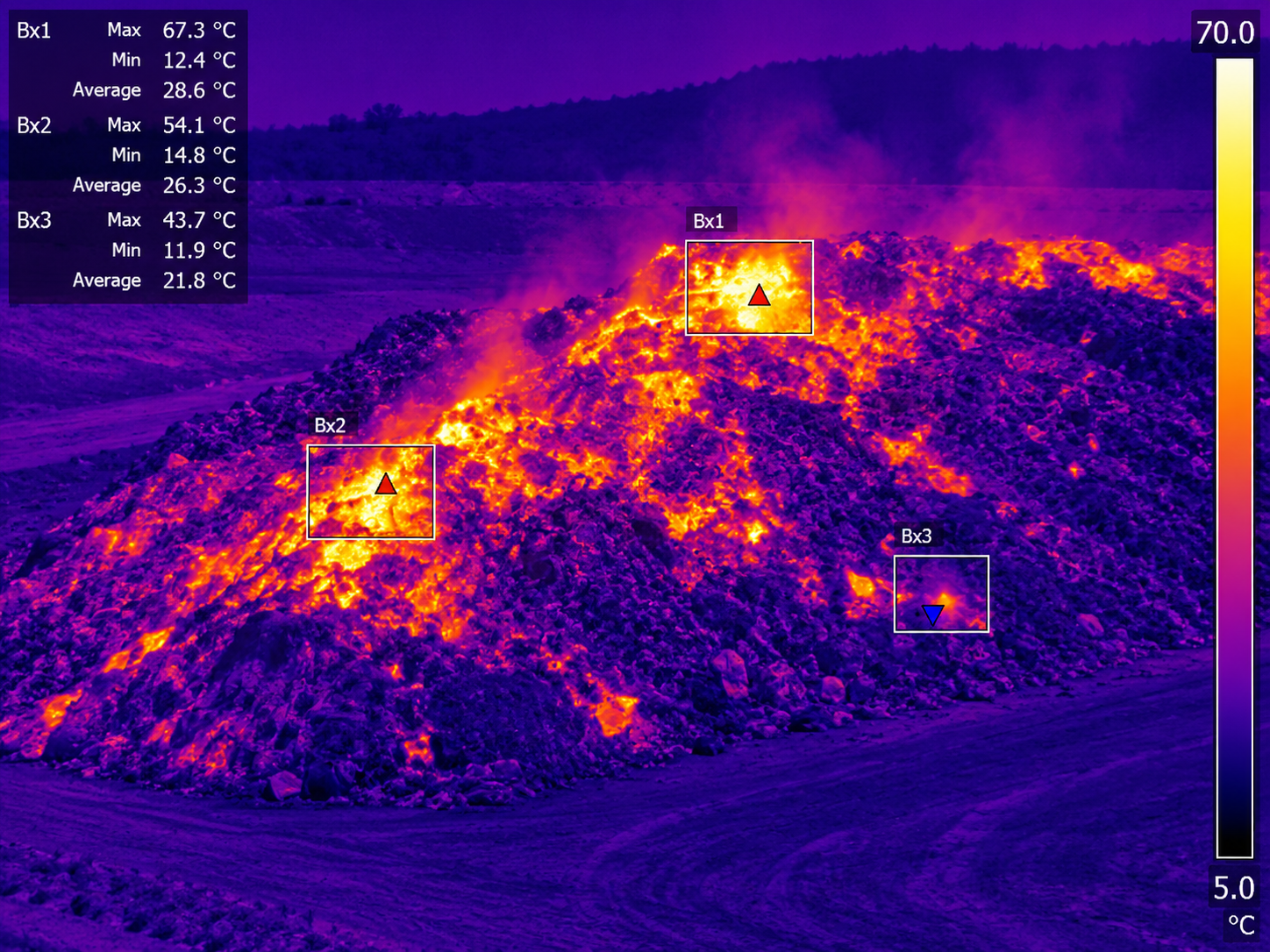
Thermal cameras watch the working face, stockpiles, and tipping areas. You set temperature limits. Heat that holds above those limits is the event, not every warm engine.
How fire detection works
The thermal camera continuously monitors designated areas for abnormal temperatures. When a hot spot exceeds the configured temperature threshold and meets the alert criteria, the system creates an event so your team can investigate developing heat conditions before they become more serious.
When an event is triggered, your crew receives thermal and visible frames along with the location, helping them check a specific area instead of searching the entire cell. Each event is logged and timestamped, creating a record that can support incident reviews, regulatory reporting, insurance renewals, and internal documentation.
Detection, not suppression
We detect abnormal heat and alert your crew with pictures they can act on. We do not extinguish fires. If you need suppression, that is a separate system.
False alarms are the first objection we hear. The system uses temperature and dwell, not motion or smoke. You set the thresholds for your site so a hot loader at noon isn't treated like a 2am subsurface event.
Built not to cry wolf.
False alarms are the first objection we hear. The system uses temperature and dwell, not motion or smoke. You set the thresholds for your site so a hot loader at noon isn't treated like a 2am subsurface event.
We tune until the alerts are ones your crew actually answers.
Industry context, not our scoreboard
Estimated 2025 fire damage at U.S. and Canada recycling and scrap facilities.
Industry fire report, 2026Of surveyed waste and recycling facilities had at least one fire in the prior year.
EREF preliminary survey